Published · El Paso Roofing Co
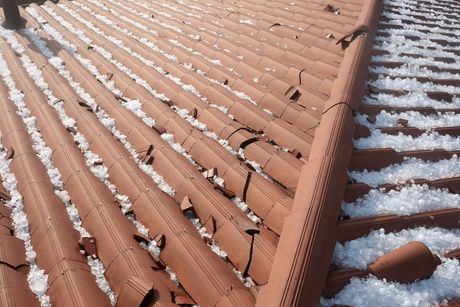
Resumen en español: Después de una granizada en El Paso, no se suba al techo. Revise desde el suelo: canaletas con granitos de las tejas, abolladuras en ventilas y en la unidad de aire, tejas rotas o sueltas y manchas en el techo interior. Tome fotos con fecha. Si ve cualquiera de estas señales, pida una inspección gratis antes de la próxima lluvia. Se habla español.
Why hail damage is easy to miss
El Paso does not get hail every week, but when a spring or monsoon cell drops it, it often comes with high wind. The result is damage that is spread across the roof and hard to see from the street. A hailstone that hits an asphalt shingle can knock off the protective granules and crack the mat underneath. The shingle still looks like a shingle, but it now ages and lets water through much faster.
Tile and flat roofs show it differently. Concrete and clay tile can crack or chip at the edges. Flat roofs with coatings or modified bitumen can get bruised or punctured, and the damage often shows up months later as ponding or a slow leak. That delay is the main reason to check soon after the storm, while the cause is still clear.
Step 1: Stay off the roof
Do not climb onto the roof yourself. Wet or damaged roofing is slippery, and broken tiles or soft decking can give way. Everything below can be done from the ground, a window, the garage or the attic. If something needs a closer look, that is what a roofer with fall protection is for.
Step 2: Walk the property and look low
Start with the things around the house. They take the same hits as the roof and are much easier to see.
- Gutters and downspouts: piles of dark granules at the downspout outlets or in the gutters mean shingles lost their coating.
- Metal vents, roof jacks and the AC unit: fresh dents or round dings in soft metal are a sign the hail was large enough to damage roofing.
- Window screens, siding, patio covers and cars: dents and tears here point to the size and direction of the storm.
- The ground: pieces of shingle, tile chips or bits of flashing in the yard came from somewhere above.
Step 3: Look at the roof from a safe distance
Use a phone camera with zoom or binoculars from the yard, a neighbor's driveway or an upstairs window. On shingle roofs, look for dark spots where granules are missing, shingles that are lifted, creased or missing, and exposed black mat. On tile roofs, look for cracked, slipped or missing tiles, especially along ridges and edges. On flat roofs you can see from a second story, look for punctures, blistering or new standing water.
Check the metal flashing around chimneys, walls and vents. Wind that comes with hail often lifts flashing, and lifted flashing is one of the most common leak sources we see in El Paso.
Step 4: Check the attic and ceilings
Go into the attic on a dry, bright day with a flashlight. Look for daylight through the decking, damp or dark spots on the wood, wet insulation and drip marks. Inside the house, look at ceilings and the tops of walls for new stains, bubbling paint or a musty smell. These are signs water is already getting in.
Step 5: Document everything
Take dated photos of everything you found: the gutters, the dents, any debris, the attic and any interior stains. Write down the date and time of the storm. If you file a claim with your homeowner insurance, your own photos taken right after the storm are useful, and a roofer's inspection photos add detail from the roof itself.
Insurance policies differ, so read yours or call your agent with questions about coverage and deadlines. Many policies have a time limit for reporting storm damage, which is another reason not to wait.
When to call a roofer
Call for an inspection if you found any of these: granules in the gutters, dented vents or AC fins, missing or cracked shingles or tiles, lifted flashing, or any new stain inside. Also call if the storm was strong enough to dent cars in your neighborhood, even if you see nothing from the ground.
A free inspection from El Paso Roofing Co means a roofer walks the roof, photographs every problem area and explains what they found in plain terms. If the roof is fine, we tell you that. If there is damage, you get photos you can use for your own records or a claim.
Book Your Free Roof Inspection
A roofer on your roof, photos of what we find and a straight answer. No obligation. Se habla español.
Call (915) 221-1860 Request a Free InspectionRelated: Wind and Hail Damage · Insurance Claims · Free Roof Inspection · Roof Repair · All Guides